Cat Pillow Pattern

The Cat Pillow Pattern is a charming and creative quilting project that combines comfort, decoration, and a love for handmade crafts. Whether you are just starting with sewing or already experienced in quilting, working with a Cat Pillow Pattern is a fun and rewarding way to create something both practical and adorable.
Creating a Cat Pillow Pattern allows you to transform fabric into a cozy and decorative pillow that adds personality to any space. These pillows are perfect for bedrooms, living rooms, nurseries, or as thoughtful handmade gifts for cat lovers.
One of the greatest advantages of the Cat Pillow Pattern is its versatility. You can easily customize the size, shape, colors, and facial details to create a unique design that matches your style. In this guide, you will learn how to create a cat pillow step by step while exploring different ways to personalize your project.
Selecting the right materials is essential for achieving a soft and durable Cat Pillow Pattern. Since this project is meant to be both decorative and comfortable, fabric choice plays a key role.
Cotton fabric is one of the most popular options because it is easy to sew, breathable, and available in a wide variety of prints and colors. It works well for both simple and detailed designs.
For a softer and more luxurious feel, you can use fabrics like fleece, minky, or flannel. These materials are especially suitable for cozy pillows.
The filling is equally important. Polyester fiberfill is commonly used because it provides softness, maintains shape, and is easy to handle.
Interfacing can be added to certain areas, such as ears or appliqué details, to give structure and stability.
Basic tools such as thread, scissors, pins, a sewing machine, and a measuring tape are necessary to complete your Cat Pillow Pattern successfully.
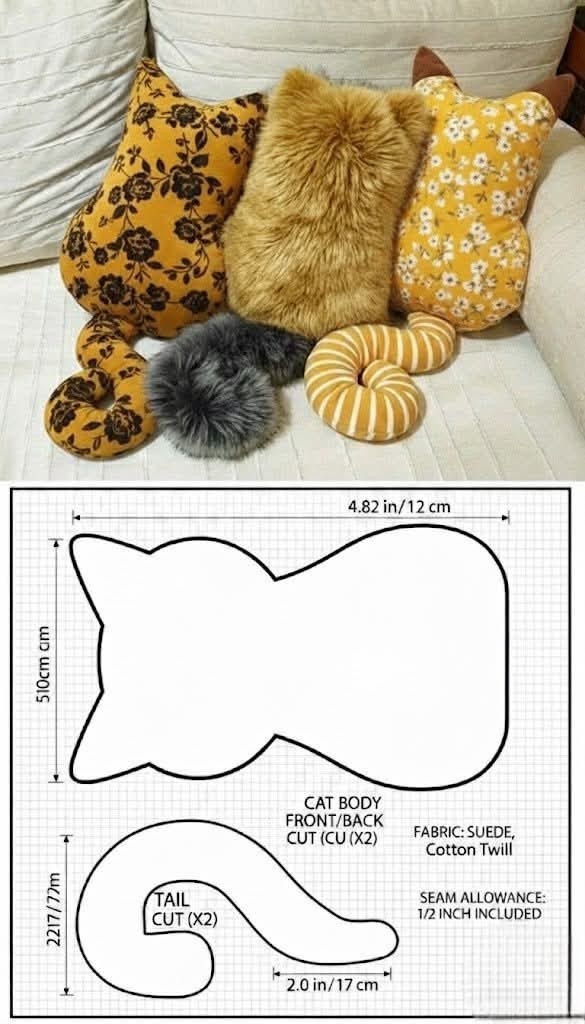
Before starting your project, it is helpful to understand how the Cat Pillow Pattern is constructed. Most designs feature a main pillow base with additional elements that create the cat’s shape.
The base can be square, rectangular, or shaped like a cat’s head or body, depending on your preferred design.
Ears are typically added at the top and may be sewn into the seams or attached separately.
Facial features such as eyes, nose, and whiskers can be created using embroidery, appliqué, or fabric paint.
Some patterns also include tails or decorative elements to enhance the playful look of the pillow.
The size of the pillow can be adjusted to suit your needs, from small decorative cushions to larger, more functional pillows.
Understanding the structure helps ensure your Cat Pillow Pattern turns out balanced, comfortable, and visually appealing.
Once your materials are ready, you can begin creating your Cat Pillow Pattern. Taking your time during each step will help you achieve a clean and professional finish.
Start by cutting all fabric pieces according to your chosen pattern. This includes the front and back panels, ears, and any decorative elements.
If your design includes appliqué or embroidery, complete these details on the front panel before assembling the pillow.
Sew the ear pieces together, turn them right side out, and position them at the top of the pillow front.
Place the front and back panels together with right sides facing inward, then sew around the edges, leaving a small opening for turning.
Turn the pillow right side out and fill it with polyester fiberfill. Distribute the filling evenly to create a soft and balanced shape.
Close the opening using a hidden stitch for a neat finish. Your Cat Pillow Pattern is now complete.
The final stage is where your Cat Pillow Pattern becomes unique and expressive. Personal touches allow you to create a pillow that reflects your creativity and style.
Fabric choice is one of the easiest ways to customize your design. You can use playful prints, solid colors, or even patchwork combinations.
Adding embroidered facial features gives the pillow character and personality. You can experiment with different expressions for a fun effect.
Decorative elements such as bows, scarves, or small accessories can enhance the overall design.
You can also create themed pillows, such as seasonal designs or color-coordinated sets for your home décor.
Quilted textures can add depth and make the pillow more visually interesting while improving durability.
The beauty of the Cat Pillow Pattern is its flexibility, allowing you to explore endless creative possibilities.
Yes, many simple designs are perfect for beginners, especially basic square pillows with added ears and simple facial features.
Cotton is the most commonly used fabric, but fleece and minky are great options for a softer and cozier finish.
Polyester fiberfill is the most popular choice because it is soft, lightweight, and maintains its shape well.
Yes, most fabric pillows can be machine washed, especially if made with durable fabrics. Air drying is recommended.
Depending on the complexity, a cat pillow can be completed in one to three hours.
Yes, many crafters sell handmade pillows, especially unique and well-crafted designs that stand out in the market.
Creating a Cat Pillow Pattern is a wonderful way to combine sewing skills, creativity, and comfort into one delightful handmade project. From choosing the right materials and understanding the design to sewing and decorating the pillow, every step contributes to a soft and charming final result.
This project is perfect for home décor, gifts, or even small business opportunities. A handmade cat pillow adds warmth and personality to any space.
We hope this guide has inspired you to create your own Cat Pillow Pattern with confidence. If you have already tried this project or are planning to start, feel free to share your honest opinion and suggestions—we would love to hear your creative ideas and experiences.